Financial Planning for Adults Age Group Between 20-30 Years
- June 11, 2026

May 18, 2026
Table of Contents
ToggleLoans have become an integral component of contemporary Indian financial planning. Whether it is purchasing a property or dealing with a financial crisis, loans have been utilized by people to cater to their requirements. Awareness regarding the various types of loan will help individuals make informed decisions while selecting suitable loan options according to their capacity.
A loan refers to a form of finance that involves lending of money by a creditor to a debtor who agrees to pay back the money over time. To answer the question of what is a personal loan, we need to know that a personal loan is the most popular type of loan which does not need security or any other collateral.
The creditors look at several aspects, like income levels, ability to pay back the loan, and credit score. Payment for personal loans is mostly done using monthly installments.
Loans play an important role in helping individuals manage both planned and unexpected financial needs. They provide immediate access to funds, allowing borrowers to handle expenses without disturbing their savings or long-term investments. Whether it is for education, travel, or emergencies, loans offer flexibility in usage.
One of the key advantages is structured repayment. Borrowers can repay the amount through fixed installments, which makes budgeting easier and more predictable. This helps in maintaining financial discipline over time and reduces the chances of overspending.
Loans also support financial planning by enabling individuals to achieve goals without waiting for years to accumulate funds. This is particularly useful for time-sensitive needs where delays may lead to missed opportunities.
In addition, timely repayments help build a positive credit history, which improves future borrowing opportunities. A strong financial profile can make it easier to access better interest rates and higher loan amounts in the future.
Overall, loans act as a useful financial tool when managed carefully, helping individuals balance immediate needs with long-term financial goals while maintaining financial stability.
Lending has been around for ages, originating in the unorganized lending among traders and their families. In previous eras, loans were given without any formalized procedures based on trust between the two parties involved. Eventually, banks came into existence, which helped to establish organized methods of lending, including interest rates and repayment schemes.
In India, however, the process of lending has gone through considerable change, particularly with advancements in technology. Many new borrowers even today begin with researching the basics of what is a personal loan to compare it with various forms of borrowing. With advances in lending technology, borrowers nowadays do not have to endure extensive processes; instead, they can obtain cash quickly via instant personal loan online.
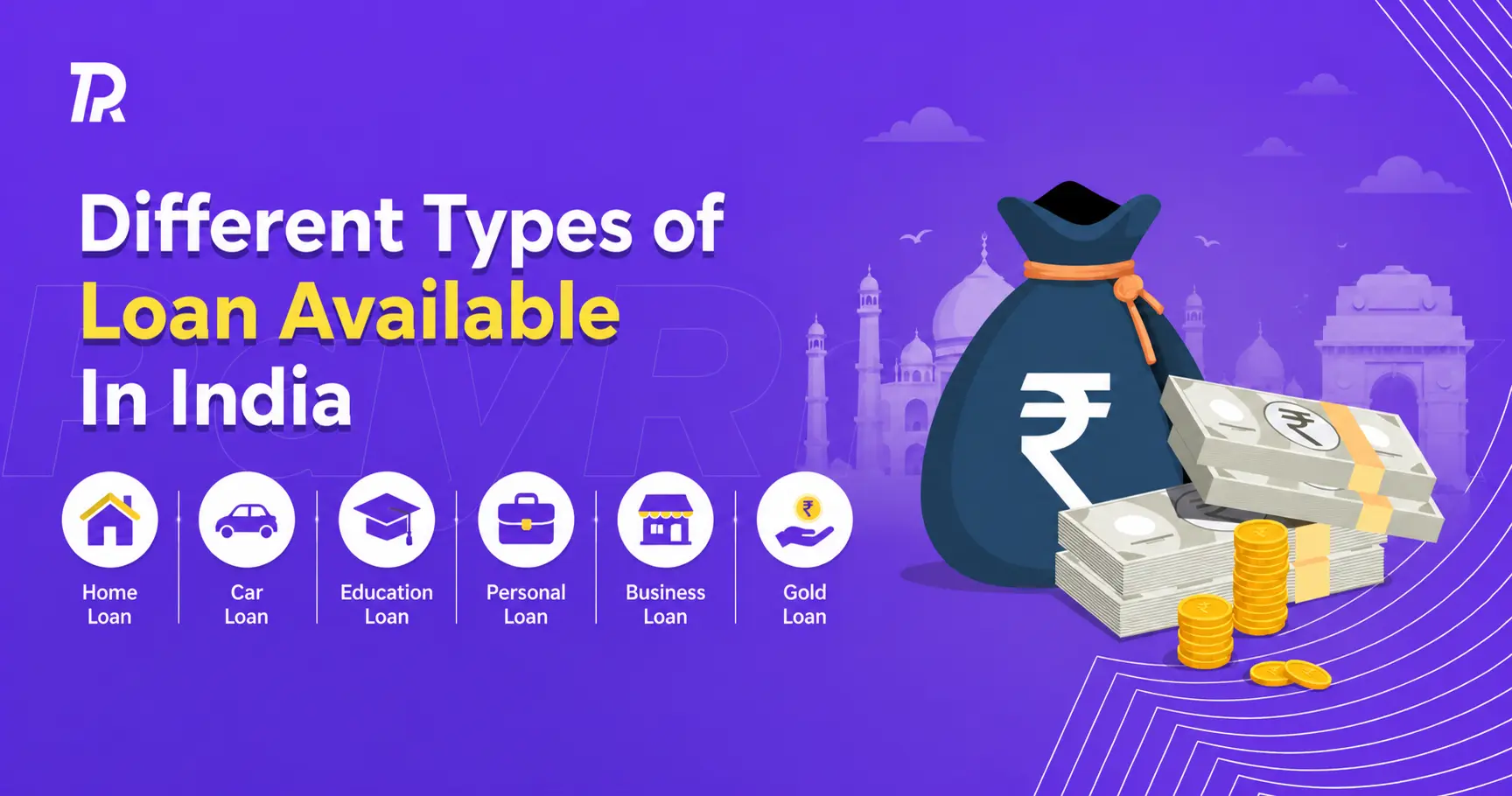
Different types of loans exist in India that cater to different purposes. The loans have been classified as either secured or unsecured. People seeking loans usually consider the many types of personal loans that exist according to their usage and repayment terms. It is important to understand the nature of each loan type so that comparison can be made in order to make the right choice.
A secured loan is one where the borrower gives out something like land, gold, or cars as security for a loan. This security makes the loan safe for the lender, and therefore secured loans tend to have low-interest rates.
Since the lender now has something like security, he is willing to offer secured loans even when the person does not meet all the criteria required. The borrower will also have a choice when it comes to the types of secured loan he or she wants to take, like home loans, gold loans, among others. It should be noted that failing to pay back could result in losing the security offered.
Unsecured loans refer to those where you don’t have to provide any security against the loan. The acceptance of such loans is made keeping in mind parameters such as your earnings, ability to repay, and even your financial background. These loans are popular among people who need funds for temporary purposes, including medical emergencies, vacations, and other urgent situations.
Because nothing from you serves as an asset, lenders will be interested in your credentials more than anything else before sanctioning a loan. It’s because of this reason that interest charged is comparatively higher. People are increasingly opting for loans such as Instant Personal Loan Online.
A secured loan is a form of loan whereby an asset is pledged to guarantee the amount borrowed by the borrower. The assets pledged include real estate, gold, or even a car. Since the lending institution has something like collateral, the loans are usually advanced at low-interest rates.
Knowing about secured loans is very important for the borrowers because it enables them to make wise decisions regarding their finances and take into account the risks attached to it. This will help them weigh their options offered by various secured loan lenders and select the one that best suits their needs.
Secured loans involve borrowers pledging their assets, which lenders will then assess to determine their worth before disbursing funds. The loan amount offered is normally a fraction of the worth of the pledged asset. Loans are repaid in EMIs, and lenders decide on repayment terms by assessing the risks involved.
Certain features characterize secured loans, making them perfect for large financial requirements. Secured loans are always guaranteed by assets, hence lowering the risk and leading to favorable conditions for the borrower.
In view of the fact that the loans offered here are secured loans with collateral, lenders find it easier to approve larger amounts. The borrower can choose from different offers from various lenders.
The availability to access secured loans is based on certain criteria such as financial and assets considerations. Lenders examine whether there is stability in earnings, the type of job, age, and the ability to pay back in order to approve the applicant. The value and ownership of the security are important considerations in deciding on the loan amount.
An individual who has a stable salary and good ownership of their assets stands a greater chance of accessing a loan. On the other hand, people even get loan approval with low income provided their security value is high enough.
In order to obtain a secured loan, the applicant needs to submit various documents like the document proving his/her identification, document proving his/her residential status, and the proof of income. Besides, there will be the documents related to the asset that will be mortgaged, for instance, property documents or gold valuation certificate.
There are various advantages associated with a secured loan, especially when the borrower has the option of using his assets as collateral. The terms and flexibility of such loans are also more beneficial to the lender because of the low risks involved.
Potential borrowers tend to compare their options among various secured loan lenders before choosing the best one. Secured loans are preferred for larger sums of money due to cost-effectiveness and structure.
There are multiple types of secured loan available in India, each designed for specific financial needs. These loans are backed by assets, which helps borrowers access larger amounts at lower interest rates.
Here are the most common types:
Home Loans: Home loans are one of the most widely used secured loans in India. They are taken to purchase, construct, or renovate a house. In this case, the property itself acts as collateral until the loan is fully repaid. These loans usually come with longer tenures and relatively lower interest rates, making them suitable for long-term financial planning.
Car or Vehicle Loans: Vehicle loans are used to finance the purchase of cars, bikes, or commercial vehicles. The vehicle itself is pledged as security, and the lender can repossess it in case of default. These loans are commonly used due to their structured repayment and easy availability.
Gold Loans: Gold loans allow borrowers to pledge gold jewellery or ornaments to get quick funds. These are ideal for short-term needs because they are processed faster and require minimal documentation. They fall under secured loans with collateral, where the value of gold determines the loan amount.
Loan Against Property (LAP): This type of loan allows individuals to mortgage residential or commercial property to raise funds. It is commonly used for business expansion, education, or major expenses. Since property is a stable asset, lenders usually offer higher loan amounts with competitive interest rates.
Loan Against Securities: Borrowers can pledge investments such as shares, mutual funds, or bonds to raise funds without selling them. This helps retain ownership of investments while meeting financial needs.
Secured Personal Loans: A secured personal loan is a hybrid option where borrowers pledge an asset but use the funds for personal needs. These loans often come with better terms than unsecured loans, and borrowers usually compare secured personal loan rates before choosing the right lender.
Understanding these types of secured loan helps borrowers choose the right option based on their needs, asset availability, and repayment capacity.
Borrowers often compare options to find the best secured personal loans based on interest rates, flexibility, and repayment terms.
Financial lending in India has undergone a major transformation over the years. Earlier, borrowing was largely limited to traditional banks, where the process involved lengthy paperwork, strict eligibility checks, and longer approval timelines. Access to credit was not easy, especially for individuals with limited financial history.
With the rise of technology and digital platforms, the lending ecosystem has become faster and more accessible. Today, borrowers can explore various types of personal loans and apply for them without visiting a branch. Online platforms have simplified the process, making it easier to compare lenders, interest rates, and repayment terms in one place.
The emergence of fintech companies and private loan lenders has further expanded access to credit. These platforms use alternative data and digital verification methods to assess borrowers, helping even those with limited credit history get access to funds. This shift has made borrowing more inclusive and flexible.
Small-ticket lending has also gained popularity. Many borrowers now opt for options like a 1000 personal loan online for immediate needs or use a 3000 instant loan app to manage short-term expenses. These solutions are designed for convenience and quick disbursal, making them suitable for urgent situations.
At the same time, traditional secured lending continues to remain important. Borrowers still rely on asset-backed loans for larger financial needs due to their lower cost and stability. The balance between digital convenience and structured lending has shaped the modern financial system in India.
Overall, the evolution of lending has made credit more accessible, faster, and tailored to different financial needs.
This transformation has made it easier for borrowers to explore different types of loan based on their financial needs and preferences.
The future of lending in India is becoming more digital, faster, and more personalised. With the growing use of technology, lenders are now able to assess borrowers more efficiently using data-driven systems. This has reduced processing time and made credit more accessible to a wider audience.
Today, many borrowers prefer digital platforms that allow them to complete the process quickly. In fact, when people search online using terms like 15000 loan apply online, they are usually looking for fast, simple, and hassle-free borrowing options. Digital platforms are making it possible to access funds quickly without lengthy paperwork or physical visits. This shift is expected to continue as more people adopt online financial services.
At the same time, lenders are improving risk assessment methods to ensure responsible lending. Borrowers are also becoming more aware of repayment responsibilities, especially in terms of Personal Loan Repayment, which plays a key role in maintaining financial stability.
While unsecured loans are growing rapidly, secured loans will continue to hold importance for larger borrowing needs due to their lower cost and structured repayment terms. The future will likely see a balance between speed, accessibility, and financial discipline.
While this segment deals primarily with unsecured loans, an insight into secured loans would assist in drawing a more effective comparison between the two types of loans. The following are some of the features of secured loans that make them ideal for larger financial requirements.
The above factors are essential in helping understand how secured loans are different from unsecured loans.
Unsecured loans refer to those instances where there is no need to present any form of collateral or asset to secure the loan. The determination of whether or not one can obtain an unsecured loan is determined by elements like earnings, ability to repay, and credit rating. Unsecured loans may be sought for purposes such as meeting medical costs, taking vacations, and covering other personal expenditures.
While secured loans are less risky than unsecured loans, the latter come with higher interest rates because the risks involved are higher. Nevertheless, unsecured loans are flexible and easier to process.
Unsecured loans are used extensively by individuals in India for personal needs as well as for financial reasons. The following list mentions the most common types of unsecured loans:
Personal Loans: Personal loans are the most frequently used unsecured loans and have various purposes, including medical emergencies, renovation, or other unexpected issues. Many individuals even take a personal loan for travel or for any family purpose. These loans involve fixed EMIs and are available for flexible tenure.
Credit Card Loans: Individuals are permitted to avail themselves of credit up to the approved credit limit through credit cards. These loans are quite simple to get and can be used for regular expenditure needs. However, these loans are granted subject to credit card eligibility.
Education Loans (Unsecured): Some forms of education loans do not require collateral and are ideal for students with no assets to secure their loans.
Consumer Durable Loans: As the name suggests, these loans are used to buy appliances, electronic items, or other gadgetry. Such loans are provided at the time of purchase with shorter periods of repayment.
Festival Loans: There are many lenders who provide festival loans, which are short-term loans. Personal loan for festival can help in meeting the expenditure of the season without affecting the savings.
Instant Digital Loans: Due to advancements in fintech, one can avail of a loan through an instant personal loan app. Such loans can be obtained without much hassle.
The purpose of each personal loan is unique, and hence choosing a suitable loan should be carefully considered.
| Pros | Cons |
|---|---|
| No need for collateral | High interest rates |
| Faster approval process | Limited loan amounts |
| Flexibility in fund utilization | Stringent eligibility requirements |
| Simplified paperwork | Chances of rejection based on income levels |
The use of unsecured loans is highly favored due to their flexibility and speed, particularly where cash is needed urgently without putting up an asset. But there’s always a price to pay, as creditors take advantage of this situation by raising interest and having tougher requirements.
It’s important for the borrowers to be able to analyze your ability for personal loan repayment before proceeding with the Loan application.
There are various reasons why unsecured loans might be beneficial to many borrowers seeking loans urgently. There is no need for collateral; hence it is much easier to reach out to borrowers who have little or no valuable property.
There is an added advantage of convenience in applying for such loans. One can apply for a loan from any part of the world and receive their money instantly, hence very helpful in cases of emergency.
Flexibility is yet another advantage. It allows one to use the money for anything such as traveling, medical bills or even for a short-term commercial venture. Personal loans are also beneficial because one does not want to dip into their savings.
One of the disadvantages is that personal loans are not exempted from paying GST on personal loans on the interest component of the loan.
The interest rates of secured and unsecured loans differ greatly from each other. The interest rates of secured loans are usually low since they are guaranteed with some form of collateral, which lowers the risk for the lender.
Conversely, the interest rates of unsecured loans are high because there is no collateral involved. The rate will depend on various things such as income, credit standing, and repayment history. People with a good financial history will get better interest rates.
Knowing this information will help people determine what kind of loan they should take out.
Applying for an unsecured loan has become simple, especially with digital platforms. Start by selecting a reliable lender and checking your eligibility based on income, employment, and financial history. Then fill out the application form online with accurate personal and financial details.
After submission, upload the required documents for verification. Once the lender reviews your profile, the loan is either approved or declined. If approved, the funds are disbursed directly to your bank account. The entire process is quick and convenient, making unsecured loans easily accessible for urgent financial needs.
What is the Unsecured Loan Process?
The procedure of taking an unsecured loan is fairly straightforward, meant to ensure prompt funding. It involves submitting an application via an online form on the platform’s website. The applicants are required to furnish details about themselves.
A decision is made regarding the eligibility of the applicants depending on their income levels, financial background, and capacity to repay the borrowed amount. Either the loan is granted or rejected. The money is then transferred into the client’s bank account in case it’s approved.
This method takes very little time and hence a favorite with most applicants.
An unsecured loan follows a simple process, designed for speed and convenience.
Step 1: Application Submission
The borrower applies through an online platform or lender’s website by providing basic personal and financial details.
Step 2: Profile Evaluation
The lender reviews income, employment status, and financial history to assess repayment capacity and risk.
Step 3: Verification Process
Documents are verified digitally, which reduces processing time compared to traditional methods.
Step 4: Loan Approval
Based on eligibility, the lender approves or rejects the application and determines the loan amount and interest rate.
Step 5: Disbursal of Funds
Once approved, the loan amount is transferred directly to the borrower’s bank account.
Step 6: Repayment
The borrower repays the loan through fixed EMIs over the agreed tenure.
This structured process ensures quick access to funds while maintaining clarity in repayment terms.
Improving your chances of unsecured loan approval requires a strong financial profile and disciplined credit behaviour. Start by maintaining a healthy credit score, as lenders rely heavily on it to assess risk. Paying EMIs and credit card dues on time builds trust and improves eligibility.
It is also important to keep your income stable and avoid taking multiple loans at the same time. Reducing existing liabilities and maintaining a balanced credit usage can strengthen your profile. Even applicants seeking loan approval with low income can improve their chances by demonstrating consistent repayment behaviour and financial stability over time.
When applying for an unsecured personal loan, having the right documents ready can speed up the approval process and reduce delays. Since these loans do not require collateral, lenders rely heavily on your identity, income, and financial background for verification.
The most basic requirement includes identity proof such as Aadhaar card, PAN card, passport, or voter ID. Address proof is also necessary, which can include utility bills, rental agreements, or official government documents.
Income proof is one of the most important aspects. Salaried individuals are usually required to submit salary slips, bank statements, and Form 16. Self-employed applicants may need to provide income tax returns, profit and loss statements, and business proof documents.
In addition, lenders may ask for recent bank statements to understand spending patterns and repayment capacity. Some digital lenders also perform e-verification, reducing the need for physical paperwork.
Providing accurate and updated documents not only speeds up processing but also reduces the chances of rejection. Proper documentation ensures smoother verification and helps build trust with the lender, improving overall approval chances.
Being prepared in advance can also help avoid last-minute delays during urgent financial requirements.
Eligibility for an unsecured personal loan is mainly based on the borrower’s financial profile, since no collateral is involved. Lenders carefully evaluate income, employment stability, and repayment capacity before approving the loan.
For salaried individuals, a stable job with consistent monthly income is important. Most lenders prefer applicants working with reputed organizations or having a steady employment history. Self-employed individuals must demonstrate consistent business income and financial stability through income records.
Age is another key factor. Borrowers usually need to fall within a specific age range, typically between early working age and retirement, depending on lender policies.
A good repayment track record also plays a crucial role. Timely payments on previous loans or credit cards improve the chances of approval, while frequent delays may reduce eligibility.
Lenders may also assess existing financial obligations to ensure that the borrower can comfortably manage new EMIs along with current expenses. Maintaining a balanced financial profile, stable income, and controlled liabilities significantly improves the chances of loan approval. Regular financial planning and disciplined credit usage further strengthen eligibility over time.
The two types of loans available in the market are secured and unsecured loans, and it becomes important to learn about them before taking any kind of decision regarding finances. In case of a secured loan, collateral like property or gold is necessary, but in case of unsecured loans, there is no need for that since they are approved on the basis of salary and financial strength.
Both loans have their own advantages and disadvantages, and it totally depends upon urgency, amount of the loan, and repayment capability whether you opt for a secured or unsecured loan.
Being aware of the difference between secured and unsecured loans will enable the borrower to make wise financial decisions. The two loans vary in functionality and each comes with unique pros and cons.
Whereas secured loans are mostly meant for borrowing large sums of money over an extended period, unsecured loans work best when there is a need for quick cash.
Having knowledge of the difference between the two will help the borrower select one loan according to his/her financial status and intentions.
It is necessary to assess yourself in terms of payment ability, urgency of getting the funds and the level of risk you are willing to take before taking out a loan.
The following table provides a comprehensive comparison:
| Basis | Secured Loans | Unsecured Loans |
|---|---|---|
| Collateral | Requires assets such as security (property, gold, vehicle) | No assets required as security |
| Risk Involved | Less risky for lenders | More risky for lenders |
| Interest Rates | Low since there is no risk involved | High because no assets are used as security |
| Loan Amount | More amounts can be borrowed | Few amounts to borrow |
| Approval | More easily to get approved with good collateral | Approval depends upon earnings and credibility |
| Time Required for Approval | More time because of asset assessment | Approvals are faster |
| Repayment Tenure | Longer loan duration available | Less time for repayment |
| Eligibility | Easy qualification irrespective of financial status | Hard to qualify without a good financial background |
Secured loans are the best type for larger amounts of money, such as financing a house purchase or expanding a business. In both cases, a lower interest rate and longer loan duration would be required. Unsecured loans, however, are usually applied when a person needs money for personal reasons or an emergency situation that requires quick access to cash.
People who are financially stable and have a good credit rating will likely benefit more from taking out an unsecured loan. Meanwhile, applicants who earn little but require funds might obtain better results with secured loans, as collateral is involved in the deal.
Conclusively, whether one opts for an unsecured loan or a secured loan relies on personal circumstances.
Determining which loan would be better, be it secured or unsecured, is based on weighing the benefits and drawbacks associated with each form. Different objectives have led to the creation of each of these forms of loans. The comparison between the two will assist borrowers in making an appropriate choice.
| Aspect | Secured Loans | Unsecured Loans |
|---|---|---|
| Interest Rates | Lower interest rates due to reduced risk | Higher interest rates due to higher risk |
| Loan Amount | Larger loan amounts offered | Smaller loan amounts |
| Repayment Tenure | Longer repayment tenure | Shorter repayment tenure |
| Processing Time | Slightly longer processing period | Faster approval and disbursal |
| Collateral Requirement | Collateral required | No collateral required |
| Risk Factor | Risk of asset seizure in case of default | No risk of losing assets |
| Eligibility Criteria | Easier for high-value loans | More stringent eligibility conditions |
| Documentation | Moderate documentation | Minimal documentation |
| Usage Flexibility | May have some restrictions | Highly versatile use of funds |
Unsecured loans work well for temporary financing needs for many individuals, including those with steady salaries. But it is crucial to evaluate one’s ability to repay the loan and plan the repayment of the personal loan properly.
Secured as well as unsecured loans involve a number of common elements, which decide the total cost and terms of borrowing.
It is necessary to know about such elements to enable individuals to make appropriate decisions while taking a loan. Other charges should not be overlooked too, as there could be an element of GST on personal loans taken by individuals.
The procedure for obtaining both secured and unsecured loans is almost similar, although their differences arise mainly due to the presence of the security element in one case and the absence of the same in the other.
The first step in obtaining a secured loan is to provide security to the lending agency. This could include land, jewelry, gold, or a vehicle. After evaluating the worth of the security, the lender grants the required loan amount. Repayment takes place via EMIs, which are fixed for a specific period. In case of default, the lender can reclaim the amount through the sale of the security.
For unsecured loans, the entire process revolves around the applicant’s credentials. The lender considers factors like income, repayment capability, and financial standing before granting any loan amount. As there is no security element involved, the whole process becomes faster.
In both situations, the borrower gets the loan amount once the process completes, and repayments take place in equal installments.
The list of lenders of loans in India comprises different types of institutions lending money according to the varying demands of the borrowers. Different types of lenders have their own strengths and areas where they excel.
Public Sector Banks: Banks owned by the government provide secured and unsecured loans at reasonable rates with different repayment plans. Public sector banks are viewed as reliable institutions but have stringent rules and conditions.
Private Sector Banks: Private sector banks offer fast loan processing services and also offer different products. They focus more on the customers and offer flexible loan options.
Non-Banking Financial Companies (NBFCs): The involvement of NBFCs helps expand credit facilities for people. They offer loans with less rigid eligibility conditions and serve as good alternatives for borrowers unable to acquire loans from normal banks.
Digital Loan Services: Loan services offered online are known to process loans fast with minimal paperwork and are useful in case of urgent requirements.
Cooperative Banks and Credit Societies: Such lenders focus mainly on particular communities.
The borrowers need to compare the organizations according to their interest rates, time taken for processing, and eligibility conditions before taking any decision.
Choosing between public sector banks, private banks, and NBFCs depends on the borrower’s needs, eligibility, and urgency of funds. Each type of lender operates differently in terms of approval process, flexibility, and customer experience, making it important to compare them carefully before making a decision.
Public Sector Banks are known for their reliability and relatively lower interest rates. Being government-backed, they follow strict regulatory guidelines and thorough verification processes. These banks are suitable for borrowers with stable income, strong financial records, and a good credit score. However, the process can be time-consuming due to extensive documentation and formal procedures.
Private Sector Banks offer a balance between competitive interest rates and faster service. They focus on customer convenience, digital processes, and a wide range of loan products tailored to different needs. While they may process applications faster than public banks, their eligibility criteria can still be strict, particularly for applicants with irregular income or limited credit history.
NBFCs (Non-Banking Financial Companies) have gained popularity due to their flexible lending approach. They are more open to evaluating alternative financial profiles, which makes them suitable for borrowers facing loan approval with low income or limited credit history. NBFCs typically offer quicker approvals, minimal paperwork, and personalized loan options. However, interest rates may be slightly higher compared to traditional banks due to the higher risk involved.
For many borrowers, especially those requiring faster access to funds, NBFCs provide a practical solution. At the same time, banks may be preferred for long-term loans due to their lower cost.
Ultimately, the best choice depends on factors such as urgency, eligibility, interest rates, and repayment capacity. Comparing all options ensures better financial decisions and long-term stability.
Understanding the different stages of the loan process helps borrowers prepare better and avoid delays during application and approval. While the process may vary slightly between lenders, the core steps remain similar.
Application Stage: The borrower begins by selecting a lender and submitting an application with basic personal, financial, and employment details. This can be done online or offline, depending on the lender.
Verification Stage: Once the application is submitted, the lender verifies the details provided. This includes checking identity documents, income proof, and financial records. At this stage, the borrower’s credit score is also evaluated to assess repayment capacity.
Eligibility Assessment: The lender evaluates whether the borrower meets the required criteria based on income, liabilities, and financial stability. This step determines the loan amount and terms offered.
Approval Stage: If the borrower meets the eligibility criteria, the loan is approved. The lender communicates the sanctioned amount, interest rate, tenure, and repayment schedule.
Disbursal Stage: After acceptance of terms, the loan amount is transferred to the borrower’s bank account. This process is usually quick for unsecured loans.
Repayment Stage: The borrower repays the loan through fixed EMIs over the agreed tenure. Proper personal loan repayment ensures financial discipline and improves future borrowing opportunities.
Understanding these stages helps borrowers navigate the process smoothly and make informed decisions.
Loan eligibility depends on several financial and personal factors that help lenders assess a borrower’s ability to repay. Understanding these factors can improve the chances of approval.
One of the most important aspects is income stability. Lenders prefer borrowers with a steady source of income, especially salaried professionals, as it indicates consistent repayment capacity. Employment history and job stability also play a key role.
Another crucial factor is the borrower’s credit score, which reflects past repayment behaviour. A higher score improves approval chances and may also result in better interest rates.
Existing financial obligations are also considered. Lenders evaluate current EMIs and expenses to ensure that the borrower can manage additional debt without financial strain.
Age, location, and type of employment may also influence eligibility. Maintaining a balanced financial profile, stable income, and disciplined credit usage significantly improves the likelihood of loan approval.
Improving loan eligibility requires consistent financial discipline and a well-managed credit profile. Borrowers who plan their finances carefully are more likely to secure better loan terms and faster approvals.
One of the most effective ways to improve eligibility is by maintaining a strong credit score. Paying EMIs and credit card bills on time builds a positive repayment history and increases lender confidence. Avoiding frequent loan applications also helps prevent negative impacts on your credit profile.
Managing existing financial obligations is equally important. Keeping your debt-to-income ratio low ensures that lenders see you as capable of handling additional financial responsibility. Reducing unnecessary expenses and maintaining a stable income improves your overall financial standing.
For individuals facing loan approval with low income, improving eligibility may involve adding a co-applicant or demonstrating additional income sources. This helps strengthen the application and increases approval chances.
Choosing the right loan amount also plays a key role. Applying for an amount that matches your repayment capacity reduces the risk of rejection. Lenders are more likely to approve applications where repayment appears manageable.
Regular financial planning and disciplined spending habits can significantly improve eligibility over time. By maintaining a balanced financial profile and responsible credit usage, borrowers can increase their chances of approval and secure better loan conditions.
Maintaining a good CIBIL score is essential for securing loans with better terms and faster approvals. Simple financial habits can make a significant difference over time.
Consistent financial discipline and responsible borrowing behaviour help build a strong credit profile, improving eligibility for future loans.
Choosing the right loan type depends on your financial needs, repayment capacity, and urgency of funds. If you require a large amount and can provide collateral, a secured loan may be a better option due to lower interest rates and longer repayment tenure.
On the other hand, unsecured loans are suitable for short-term needs where quick access to funds is important. They are convenient and require minimal documentation but come with higher interest rates.
Before making a decision, it is important to evaluate your income, existing liabilities, and long-term financial goals. Selecting the right loan ensures better financial stability and easier repayment.
The eligibility of a loan is the set of criteria that needs to be met by the applicant before being granted a loan. Various factors are checked to see if the applicant will be able to pay back the borrowed money comfortably.
Firstly, the income stability of the applicant plays an important role. The lenders like their applicants to have a stable source of income, and salaried professionals have an edge over others in this aspect because it helps them repay on time.
Another very important factor that decides the eligibility of the borrower is his or her credit score. A high score is always preferred and increases the chances of loan approval as well as getting good interest rates.
Apart from this, lenders also check if the individual has any other EMIs or financial burdens to check if he or she will be able to handle another loan or not.
There might be situations where a person with little income is also eligible for a loan, depending on their financial discipline or loan size.
In order to avail loans, one needs to provide necessary documents including proof of identity, proof of address, and proof of income. These are needed by the lender to make sure that all the information provided is accurate and true.
Lenders can also ask for additional documents like bank statements and proof of employment/business in order to evaluate the capability of repayment.
I) Salaried Applicants
Salaried candidates must usually submit necessary papers regarding proof of employment and stability of income. This includes documents such as the latest salary slip, bank statement, and Form 16. Such papers allow the lender to determine the capacity to repay as well as stability.
The details about employers and tenure are equally significant, since it highlights job stability. The preferred candidate is one who works with reputable firms or is employed consistently. Some situations may require an offer letter or contract as well.
Submission of correct papers enhances the chances of approval and expedites the process of obtaining the loan. Stability of income along with documents will boost the applicant’s financial standing.
II) Self-Employed Applicants
Proof of stable business income is provided by the self-employed candidate through tax returns, profit-and-loss statements, balance sheets, and bank statements.
Sometimes documents proving registration of the business, along with other important papers regarding the nature of the business, are needed to prove its legitimacy and income stability. In case of variable income, the banks scrutinize the financial papers meticulously before sanctioning the loan amount.
Depending upon the type of business, sometimes additional documents like those of GST are also sought. Proper maintenance of all kinds of paperwork helps the self-employed candidates enhance their chances of getting approved for the loan.
Nowadays, getting loans has become a lot easier due to various online portals available. The first step includes selection of a lender with respect to interest rates, eligibility criteria, and repayment terms. There are many lenders, and borrowers must take time to review them and choose the best one.
After choosing the lender, the next step would include filling out the loan application with personal and other necessary details. It must be ensured that all details mentioned are correct. Following that, necessary documentation is uploaded by the borrower.
This information is further evaluated by the lender based on the income level and financial status, including the credit score of the borrower. This is quite important as it forms a crucial part of loan processing and determines whether the loan will be approved or rejected. Based on this, a decision is made on whether to reject or approve the loan.
In case the loan is accepted, information about the amount sanctioned, interest rate, and tenure of the loan is shared with the borrower. Once accepted, the loan amount will be transferred directly into the bank account of the borrower. He or she pays the loan amount using monthly installments. Managing personal loan repayment responsibly ensures financial stability and improves future borrowing opportunities for the borrower.
Before you make a loan application, you need to review your financial status. You should first check your income, outstanding obligations, and your ability to repay. This will help you plan your loan comfortably without any financial pressure.
The interest rate and other fees are also essential aspects that you should look into since they determine the amount of money you will pay. There are some fees such as GST on personal loans that increase your expenses.
Duration of the loan is another aspect you need to consider, because when the period is longer, it will decrease the EMIs but will increase the total interest rate you will have to pay. On the other hand, shorter periods will result in higher EMIs but lower overall costs.
You need to compare different lending institutions to get the most favorable conditions and terms. By knowing your eligibility and obligations, you will be in a better position to repay the loan without any financial distress.
Loan EMI Calculator refers to an online financial instrument that allows borrowers to estimate their monthly loan repayments before availing of any loan. Through the use of such calculators, individuals can easily estimate their EMIs based on the amount of loan taken, its interest rate, and the tenure.
Such tools come handy when making plans about their finances beforehand. Rather than carrying out manual calculations, borrowers can easily change values and consider different types of loans to choose a suitable one.
EMI calculators are helpful because they allow borrowers to know the complete cost of financing and the amount of interest they need to pay throughout the duration of the loan. Through this, they become more aware of the effect of interest rates and loan tenure on monthly payments.
Through the use of an EMI calculator, borrowers can make wise decisions without being financially burdened by the loan.
The online EMI calculators operate using a basic math formula, which takes into consideration such parameters as the loan amount, rate of interest, and the tenure to compute the monthly payment. Such a tool is developed in order to offer fast and easy-to-understand computations regarding a loan amount.
In fact, as soon as the user enters all required details regarding the loan to be taken, the system computes the loan amount and provides its user with the required details including interest, EMI amount, as well as total repayment.
The calculator will change the EMI depending on the values that were entered previously. Thus, if you extend the tenure, your EMI will fall, but at the same time you will pay more interest; however, if you shorten the tenure, you will have to make higher payments, but you will also end up paying less interest over the loan period.
Such a tool may be helpful if a person intends to compare various options in order to find the best one.
By calculating EMI via an online calculator, people ensure proper loan planning and avoid unexpected situations later on.
The EMI on a loan can be determined through a mathematical equation that takes into account the loan amount, rate of interest, and tenure of repayment.
Formula for EMI:
EMI = [P x R x (1 + R)^N] / [(1 + R)^N – 1]
where:
The above formula can be used to calculate the regular repayment amount required to pay off the loan within a certain timeframe. However, although the above formula can be used manually to calculate EMI, most individuals use EMI calculators available online.
There are a number of benefits associated with using a personal loan EMI calculator that enables people to manage their finances wisely and easily. One of the greatest benefits of using the tool is quick and effective financial planning. People can easily alter such parameters as the total amount of loan, interest rates, and period of the loan term in order to get an accurate EMI.
Another benefit is related to saving one’s time. Using a personal loan EMI calculator enables getting the result immediately without the necessity to perform any calculations on your own. This will enable people to analyze all possible loan opportunities without any problem and get the desired information easily.
In addition, a loan EMI calculator makes it easier to avoid making mistakes, such as taking a larger amount of money than one really needs to repay.
There are different types of loan EMI calculators available to suit various borrowing needs. Each type is designed to help users estimate repayments for specific loan categories and understand their financial commitments in advance.
Personal Loan EMI Calculator: This calculator is used to estimate EMIs for personal loans based on loan amount, interest rate, and tenure. It is helpful for planning short-term financial needs.
Home Loan EMI Calculator: It helps calculate EMIs for long-term housing loans and also provides insights into total interest payable over extended periods, making it useful for long-term financial planning.
Car Loan EMI Calculator: This is specifically designed for vehicle loans, helping borrowers plan repayment based on loan amount, interest rate, and tenure before purchasing a vehicle.
Education Loan EMI Calculator: Used to estimate repayment for education loans, often considering grace periods and flexible repayment structures offered by lenders.
Business Loan EMI Calculator: Helps business owners calculate EMIs for loans taken for expansion, working capital, or operational needs.
Each type of EMI calculator simplifies financial planning by providing clarity on repayment obligations, enabling better comparison of loan options, and helping borrowers choose suitable repayment structures.
An online EMI calculator is a powerful tool that simplifies the loan planning process. It allows borrowers to quickly estimate their monthly payments and understand the overall cost of borrowing without any manual effort.
One of the main advantages is convenience. Borrowers can access the calculator anytime and adjust inputs such as loan amount, interest rate, and tenure to explore different loan scenarios. This flexibility helps in comparing multiple options and selecting the most suitable one.
It also improves financial awareness by clearly showing how interest rates and tenure affect total repayment. This enables borrowers to make informed decisions and avoid financial strain during the loan period.
Additionally, an EMI calculator helps borrowers plan their monthly budget more effectively. Overall, it reduces uncertainty and ensures that borrowers choose loans that align with their financial goals and repayment capacity.
A debt trap occurs when a borrower takes multiple loans and struggles to repay them due to increasing financial obligations. As repayments pile up, borrowers may take new loans to cover existing ones, leading to a cycle of debt that becomes difficult to manage over time.
Common indicators of a debt trap include missing EMI payments, relying on new loans to repay existing ones, and consistently struggling with monthly expenses. Borrowers may also notice increasing credit usage and reduced savings over time. Such patterns indicate financial stress and, without proper planning, can lead to long-term instability.

Customer Service Number:
022489-30118
Email: [email protected]
Customer Service IVR Number: 08068025850


© 2026 PayRupik All rights reserved.

Leave a comment